Families & carers
For families
When someone rings sounding like your daughter, you send a check to her phone. A scammer with a cloned voice can't say yes on it.

A cloned voice can sound exactly like your daughter, your grandson, or you. KinShield gives your family a private check a cloned voice can't answer: a check sent to the phone you paired with, and a code that changes every minute for when there's no signal.
Your ears can no longer tell. A few seconds of someone's voice is enough to clone it.
KinShield does not try to catch the fake on the call. It moves the proof somewhere a fake cannot follow: onto a phone the real person is holding.
28%
of UK adults say an AI voice-cloning scam targeted them in the past year
Source: Starling Bank, Sept 202446%
had never heard of voice-cloning scams
Source: Starling Bank, Sept 20243 sec
of recorded speech can be enough to copy a voice, says Starling Bank
Source: Starling Bank, Sept 2024£576m
lost to authorised push payment scams in the UK in 2025
Source: UK Finance, Annual Fraud Report 2026Sources: Starling Bank and Mortar Research, survey of more than 3,000 UK adults, published September 2024; UK Finance, Annual Fraud Report 2026.
Good evening
Sarah
Your code with Mum
Jade · Harbour
482 913
Prefer digits instead?
Read it only on a call you made to Mum.
Quick actions
●My family
See allLive preview. Your code with each person changes every minute.
01
Add the people you would drop everything for. Parents, grandparents, grown-up children, a carer. Name your circle and agree a safe word together.
02
Sit in the same room, phone to phone, and scan a code. Not over a call, not over text. Pairing is the trust ceremony, and it only happens face to face.
03
When a call feels wrong, say: “Hold on. I'm sending a check to your phone.” Then tap Check it’s and their name. The check goes to the phone you paired with, and they say yes on it. A scammer cannot.
04
Your code with each person changes every minute and works without signal. Say: “Read me the 6-digit code on your KinShield.” Type what you hear. If they stall, make excuses, or ask you to skip it just this once, hang up and call the number you already have saved.
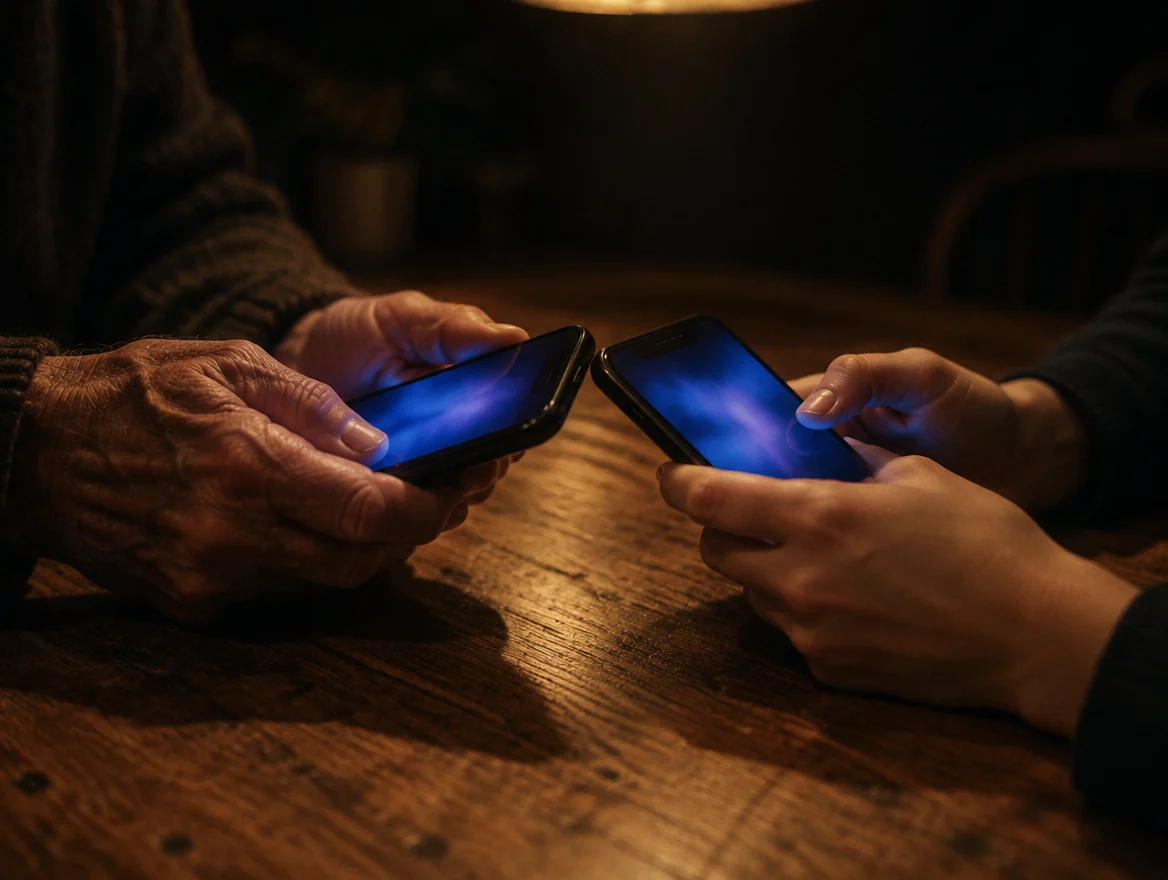
Pair in person. It is the strongest proof.
A phone call is exactly what a scammer can fake, so the secret is best shared between two phones in the same room. For family far away, Pro adds them through two calls you each place to a number you already have, and a day’s wait. Their checks show amber, not green, until you meet.

Scams rely on panic and urgency. KinShield gives you one calm line to say, and a clear answer in seconds.
James
Sounds exactly like him
StopExcuses are the tell. Hang up and ring the number you already have.
VerifiedThe real James says yes on his phone, and your screen shows it.
After pairing, your code works without internet: with no signal, they read you the 6-digit code on their KinShield. That matters when a scam arrives with “I’m stranded and my data’s gone.”
Agreed in person and never sent by text. If a phone is dead or left at home, ask for the safe word instead.
A second backup for unknown numbers, after your safe word. If someone on a new number can't answer, hang up and ring back on a number you know.
Larger text, plainer words, bigger buttons. Readable when you are 75, tired, or frightened.
The Learn hub explains the habit in under a minute a lesson, including how to spot an impersonation attempt.
A green tick means a real check happened. If a check cannot run, the app says so. It never guesses.
When someone rings sounding like your daughter, you send a check to her phone. A scammer with a cloned voice can't say yes on it.
What we believe
Proof over guesswork. A steady hand, not a siren. Honesty over hype. Your voice is no longer a password.
We would rather tell you exactly what the app does than promise what no app can.
Protection for two people
An in-app subscription for a bigger family
Anything we have not covered here is set out in plain English in our privacy policy. Read the privacy policy
No. It never uses the microphone and does not listen to your calls. The check happens on your phones: you send a check to theirs, and they say yes on it. With no signal, they read you the 6-digit code on their KinShield, and you type it in.
No, and that is deliberate. Detection is an arms race and gives false confidence. KinShield sidesteps it: a clone can copy a voice, but it cannot read a screen in your family member’s hand.
Ask for the safe word you agreed in person, or use your challenge questions. Someone who really is family knows them. If they can't answer, hang up and ring back on a number you know.
Not after pairing. Both phones work out your code on their own, every minute, so with no signal you can say “Read me the 6-digit code on your KinShield.” and type what you hear. Sending a check to their phone needs a connection.
Because a call is exactly what a scammer can fake. Pairing face to face means the secret was only ever shared between two people in the same room. For family far away, Pro can add them with two phone calls and a day’s wait; their checks show amber until you meet and pair in person.
As little as possible: your account, your circle, and a record of checks. Secrets such as your safe word are stored as hashes, not plain text. You can delete your account and all its data from Settings. The full detail is in our privacy policy.
KinShield is in beta on iPhone and Android now, and testers join by invitation. The public release is coming soon.
Free protects you and one other person, with every check included. Pro, for a bigger family, is an in-app subscription. You see its price in your own currency in the app before you choose, and you can cancel in your Apple ID or Google Play settings. Pro is free for everyone during the beta, until 1 March 2027.
Where we are
Five seconds. One check. One less way for a stranger to sound like family.